Pollinator Gardening

Pollinator landscapes bloom from spring though frost.
They paint earth and sky in spectacular colors.

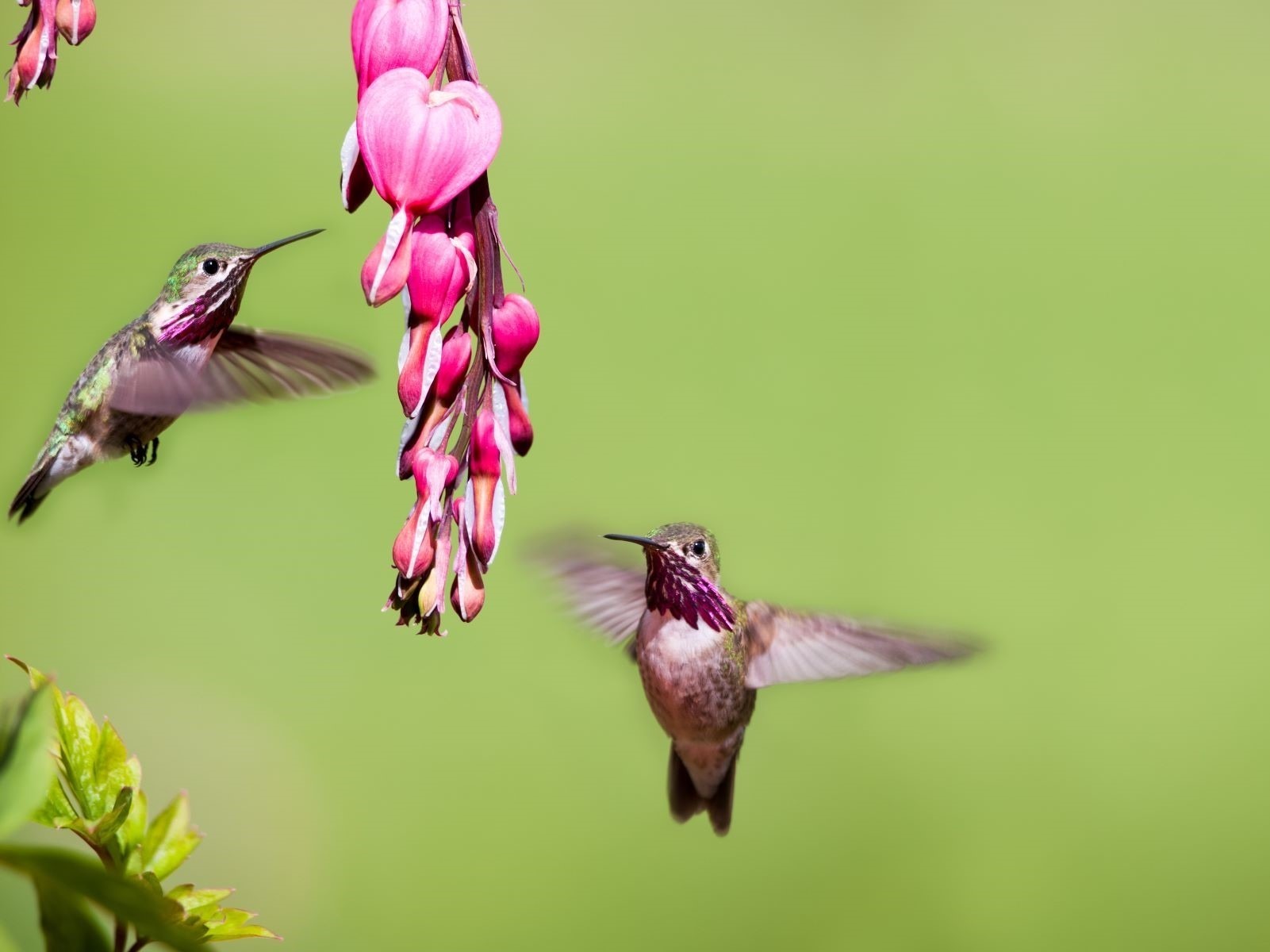
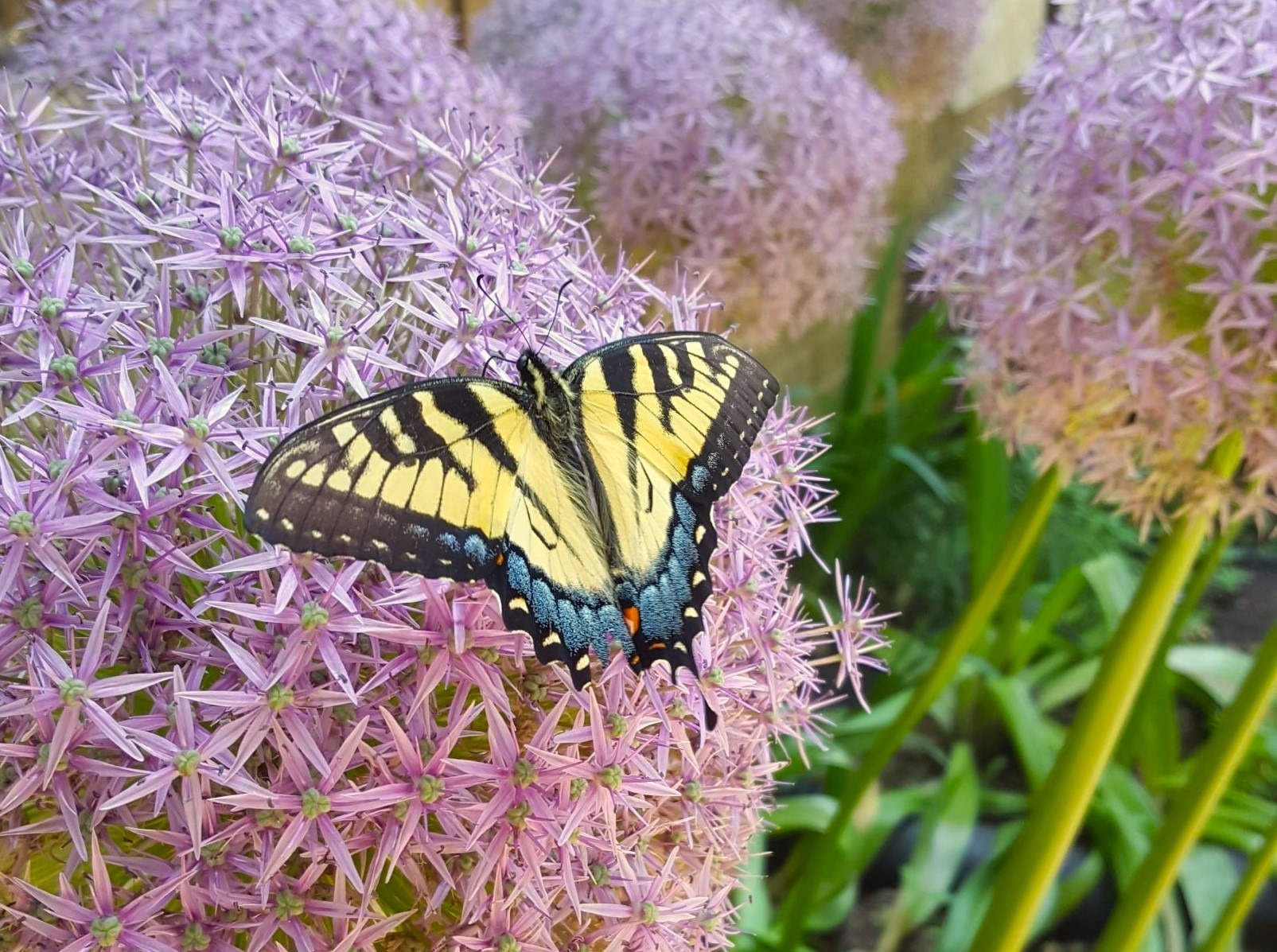
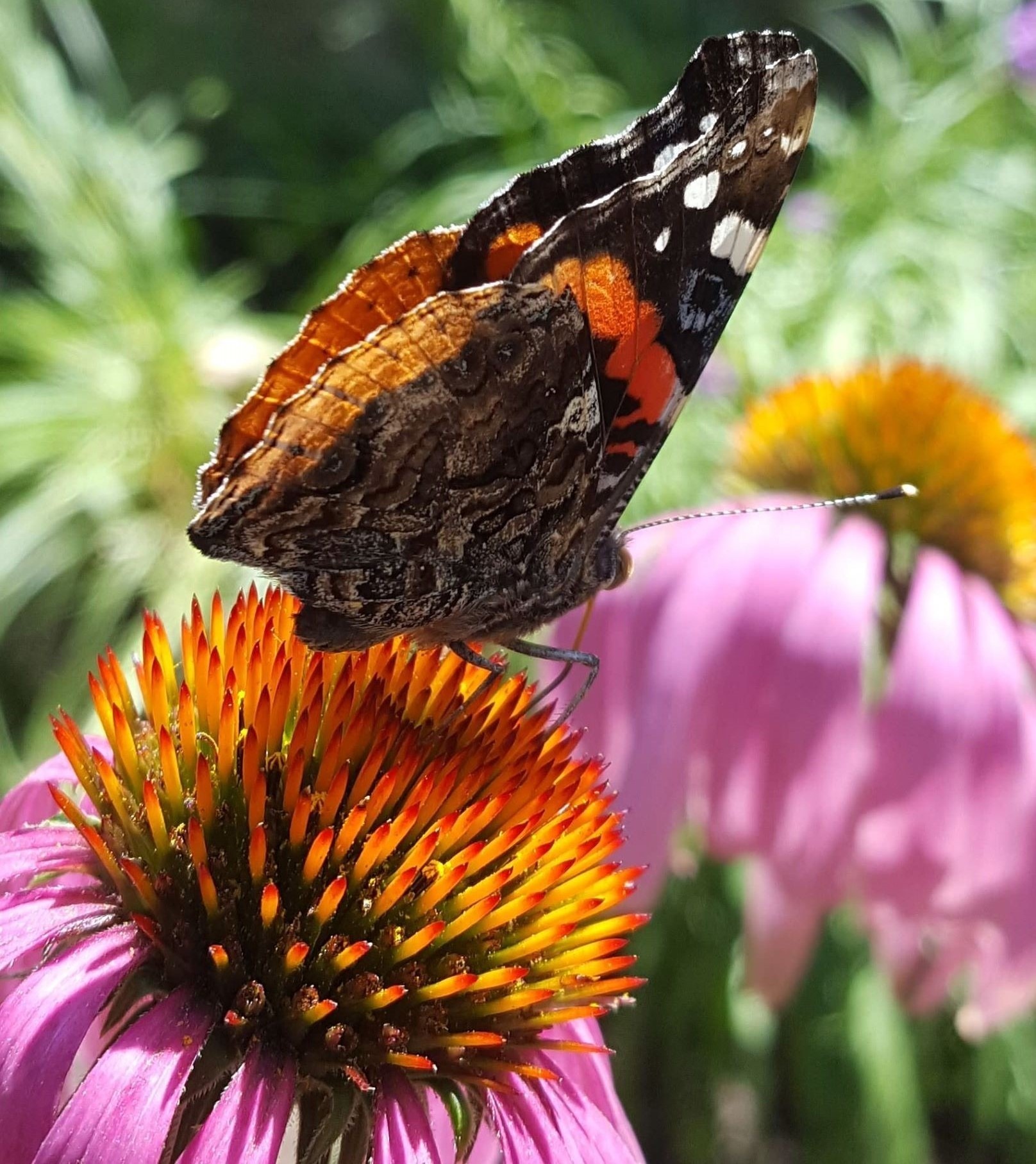
To attract a beautiful array of butterflies, bees and hummingbirds to your yard, an amazing color show of timed blooms from early April into October will create the perfect hub for pollinators. It all begins with a well-designed landscape plan of nectar and host plants, proper plant siting and other elements of good design. Pollinator gardening is a mutually beneficial opportunity to participate in conservation and experience the serenity of connecting with nature up close.

Bloom! In the News:

Pollinator Gardening Tips

Fall is the perfect time to put in pollinator-friendly plants, and help the environment

Sept. 4, 2020
Milwaukee Journal Sentinel

In this Article:

*Attracting specific pollinators
*Buzz pollination
*Favorite pollinator plants
*Flower size and shape

If you want a dedicated pollinator garden, you have to have large quantities of both host and nectar plants for all the different pollinators, said Kristyn L. Greenfield, owner of Bloom! Landscaping in Wauwatosa.


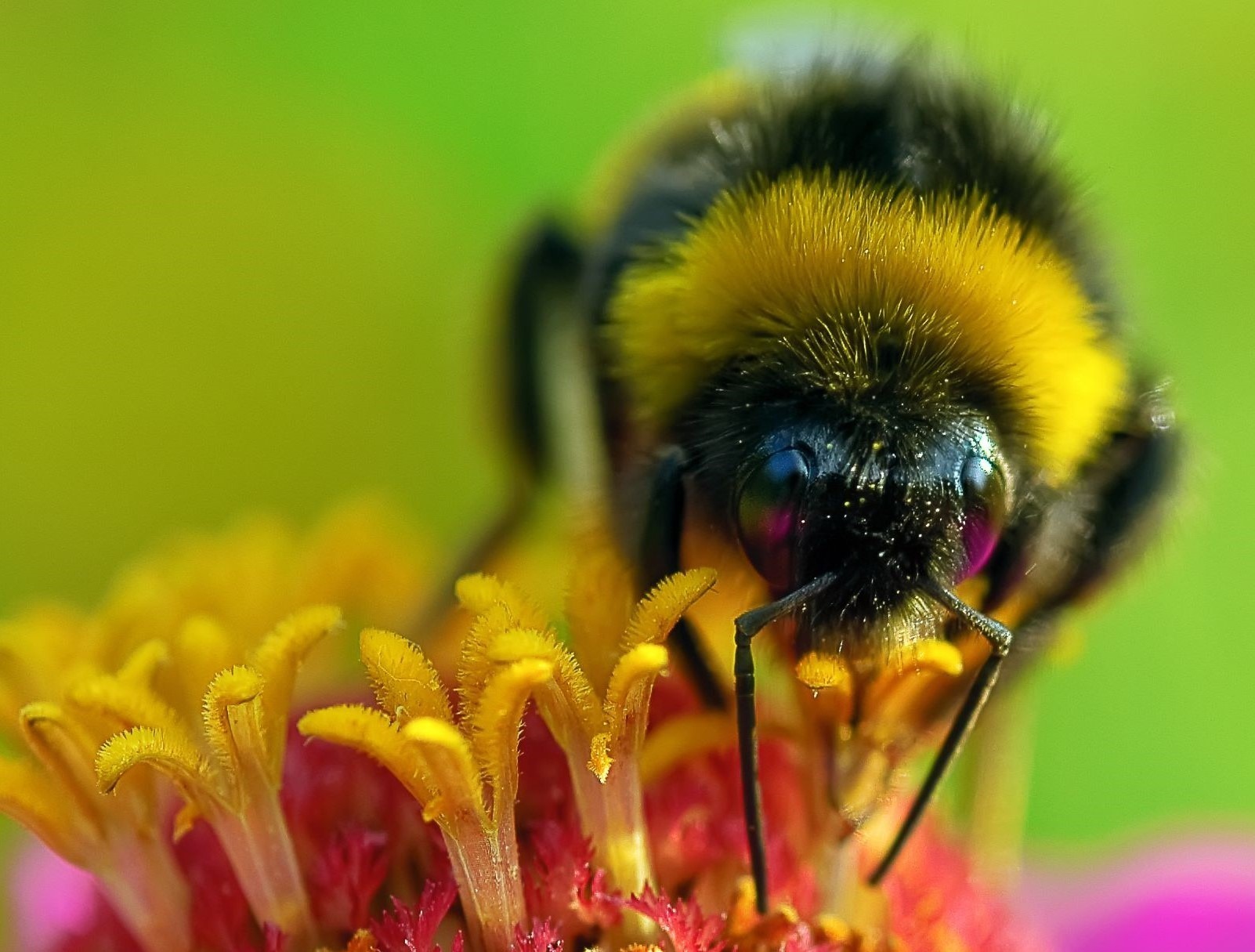
“…they use ‘buzz’ pollination methods, where you literally hear them buzz, buzz, buzz from flower to flower vibrating the pollen into position, whereas, another bee may not be able to deliver the pollen to the reproductive parts of the flower.”


Pollinator Gallery (mobile)

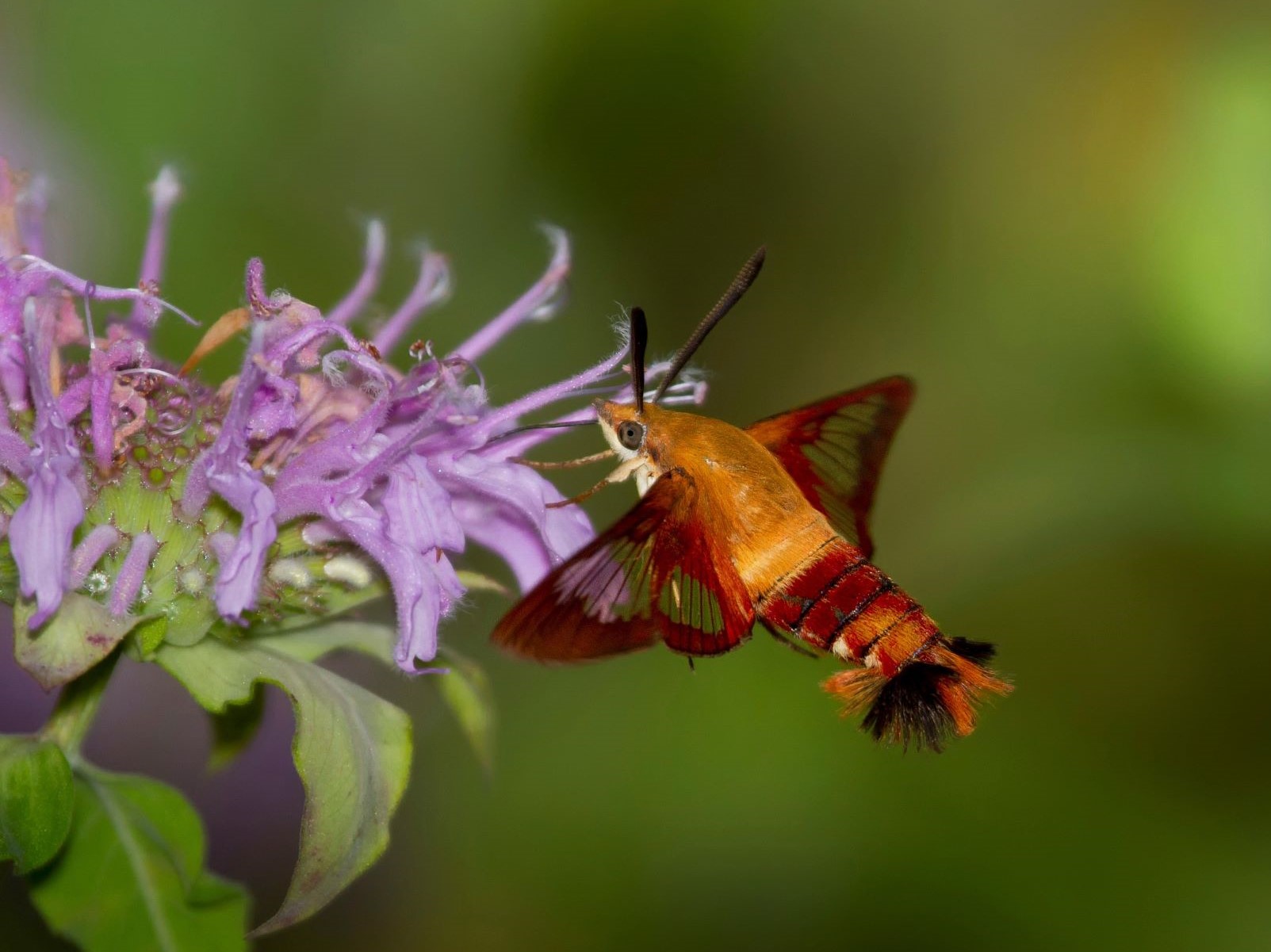
“If you have thousands of flowers or florets available, you have a hub. It’s like an awesome restaurant or bar that everyone wants to come to. If you want a wide variety of butterfly species, cool hummingbird moths and native and honey bees, the garden should be filled with plants that have large flower heads such as phlox,” as the flower head on that plant could provide 100 flowers, whereas, for example, the flower on a daylily would provide just one, Greenfield said.

Back to Top


Butterfly I.D. Pics

ORGANIZED BY SIMILARITIES: This is an easy starter i.d. guide of butterfly favorites seen in the Greater Milwaukee area. We have many more native butterfly species in Wisconsin that are trickier to i.d. or less common in the southeast. Most of these beauties are found throughout the U.S.

Swallowtails

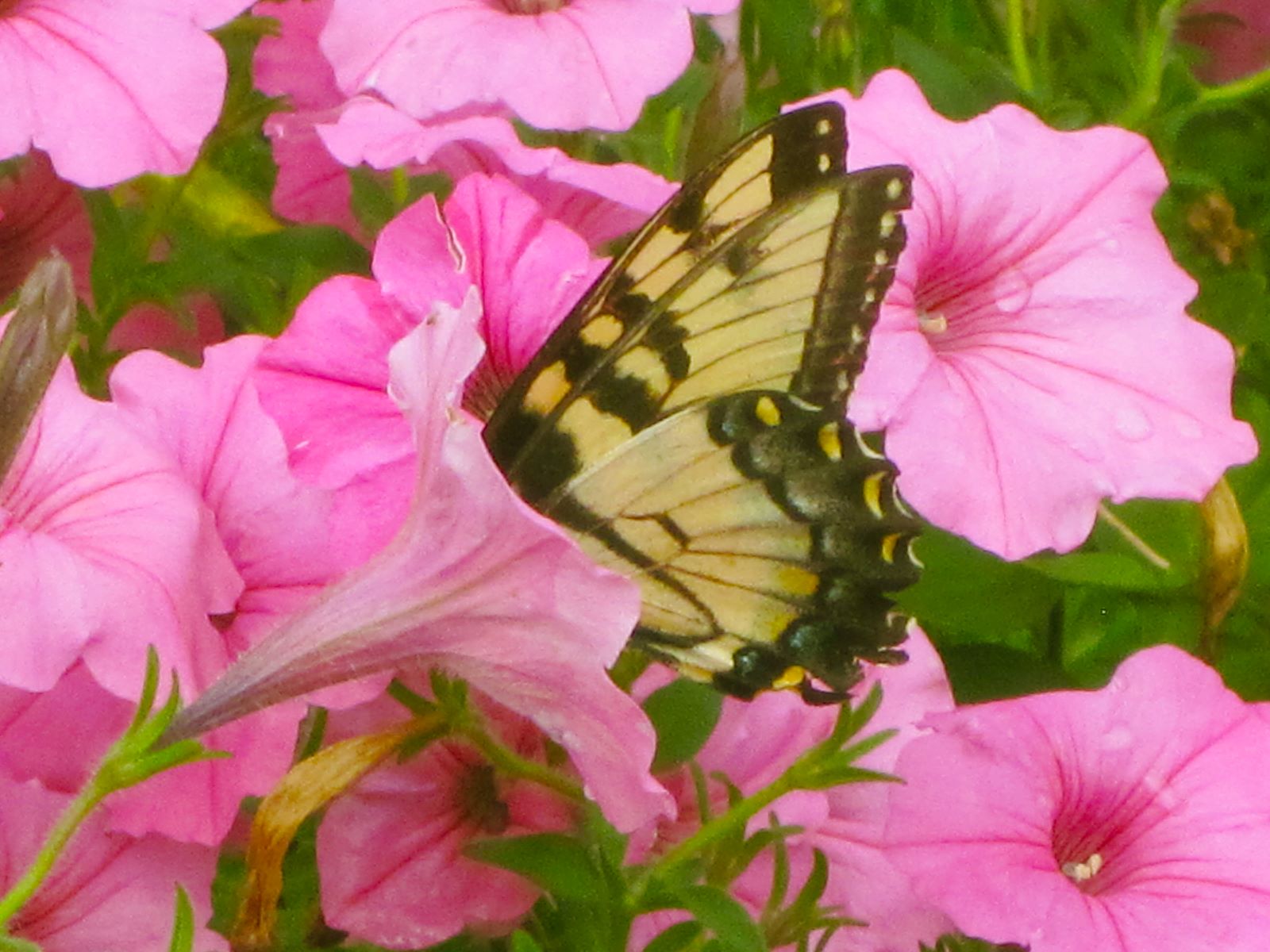
Eastern Tiger Swallowtail (female)
Eastern Tiger Swallowtail (male)
Eastern Tiger Swallowtail (closed wings)
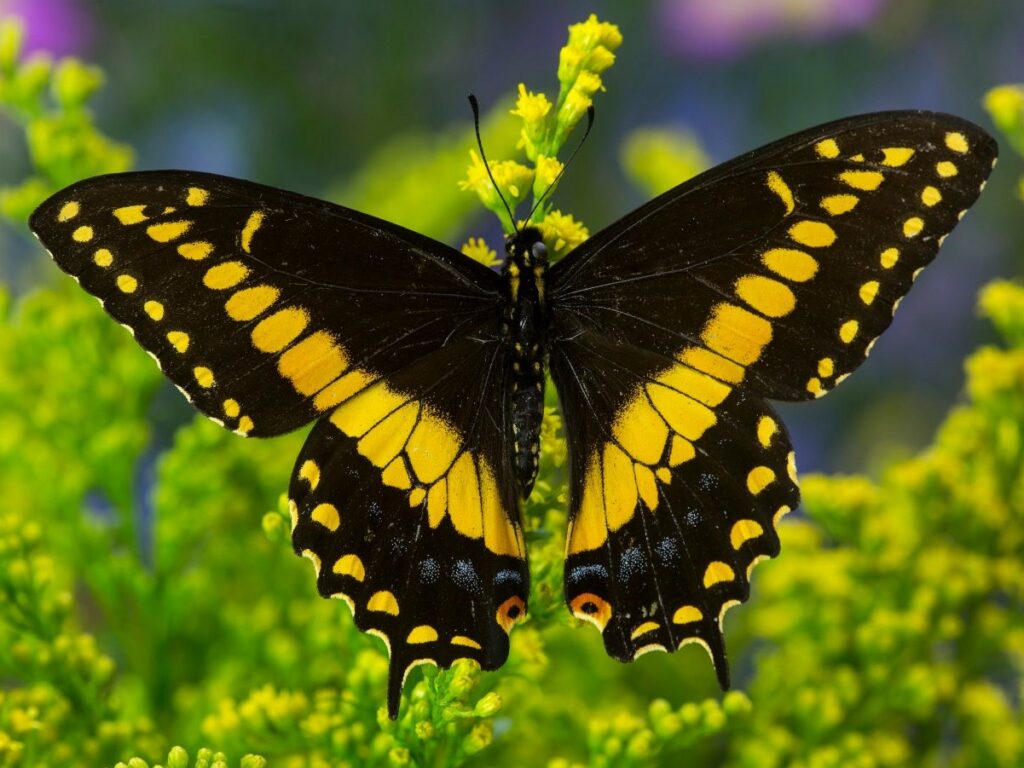
Black Swallowtail (female)
a large black butterfly with a wide yellow diagonal band across each upper and lower wing on blurred green background of herb
Black Swallowtail (male)
Black Swallowtail
(closed wings)
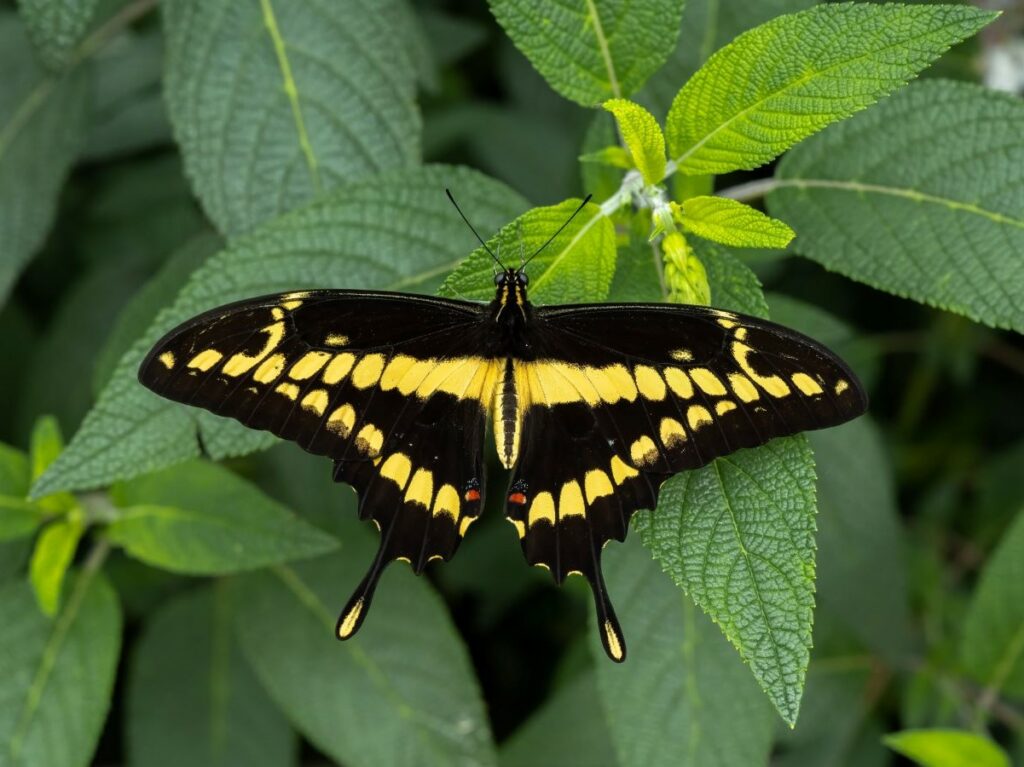
A large black butterfly with a large horizontal band of yellow across its wing spread and yellow marking around the edge of wings rests on green leaves
Giant Swallowtail (open wings)
Giant Swallowtail
(closed wings)

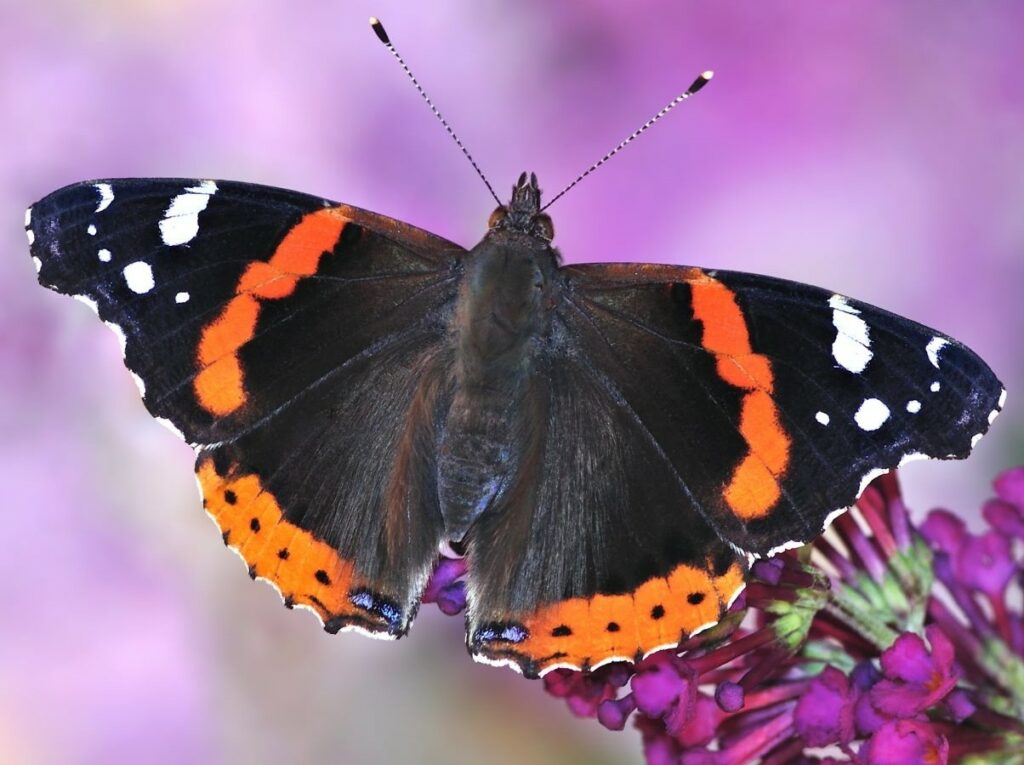
Red Admiral

a black butterfly with orange and white markings sits on a purple butterfly bush flower
Red Admiral
(open wings)
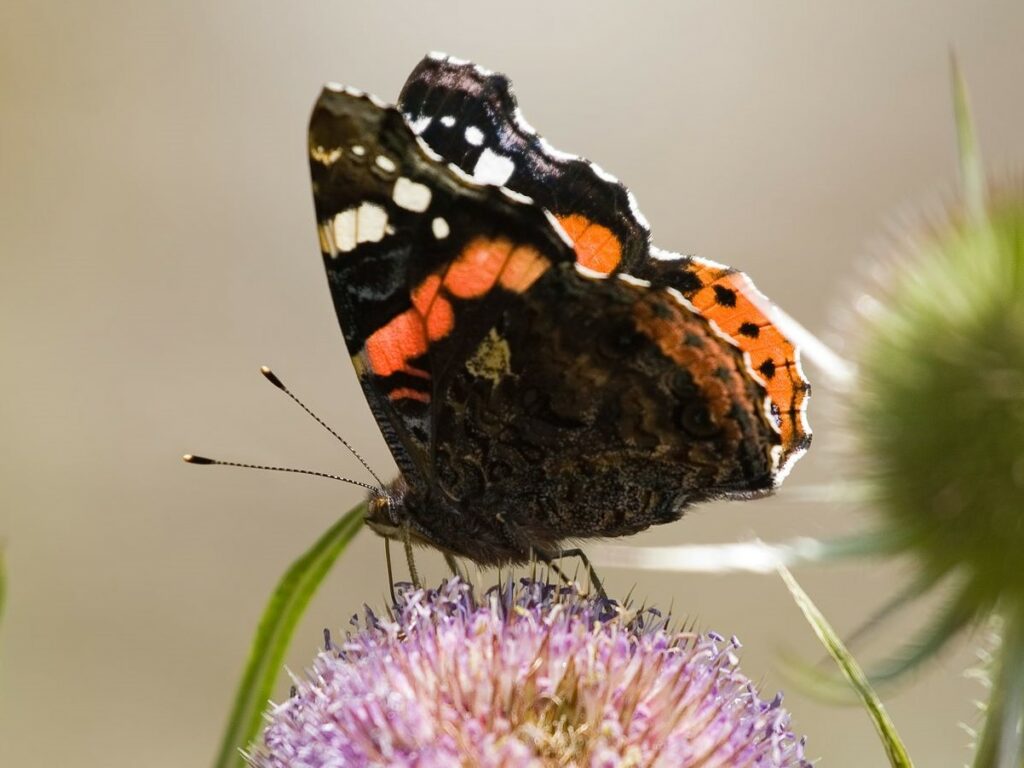
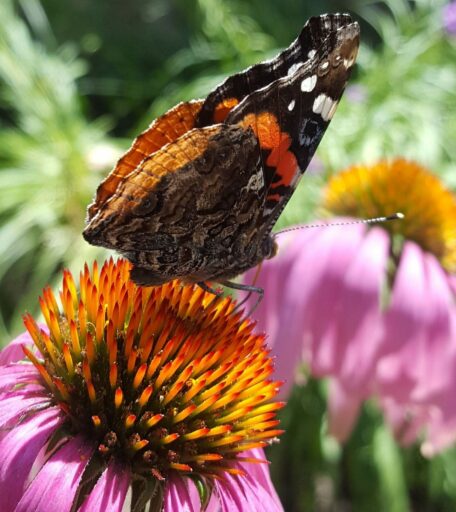
A medium black butterfly sits on a lavender thistle flower with wings closed. The underside of wings has a white band above and orange band with orange tinges at tips of lower wings.
Red Admiral
(closed wings)

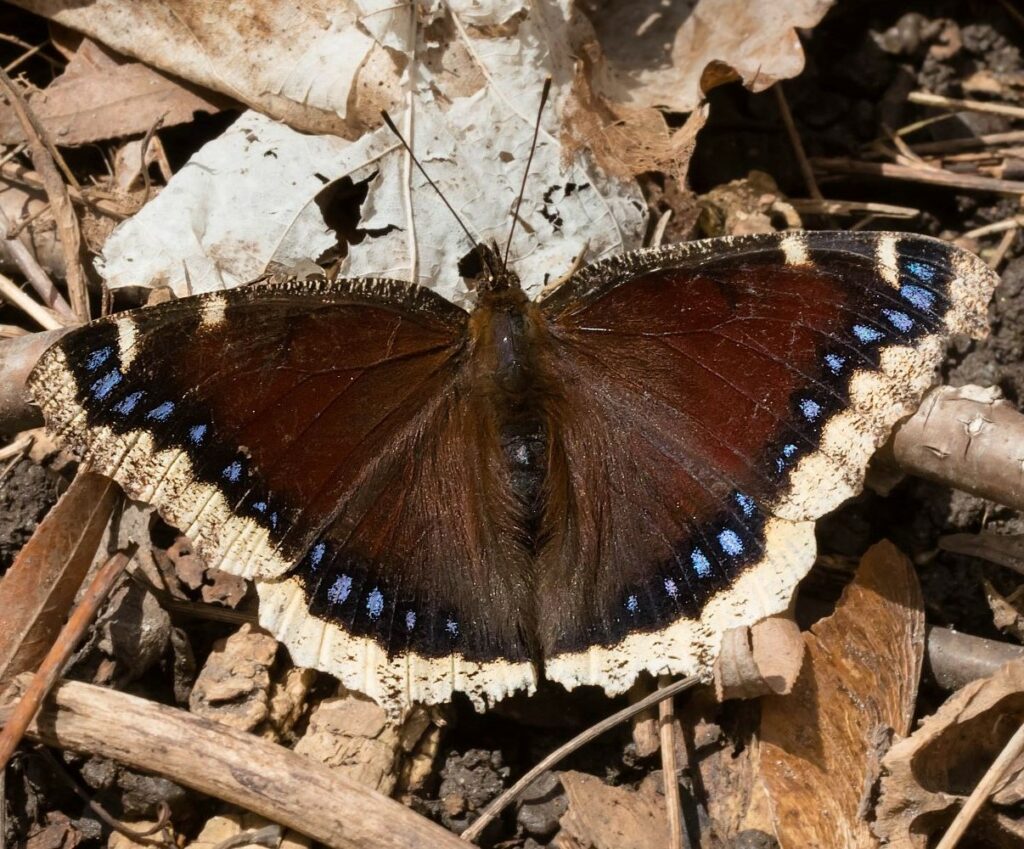
Mourning Cloak

A large, roundish brown butterfly with small blue dots sitting above pale yellow wing margins is sitting on brown leaves and winter debris on the ground.
Mourning Cloak
(open wings)
Mourning Cloak (closed wings)

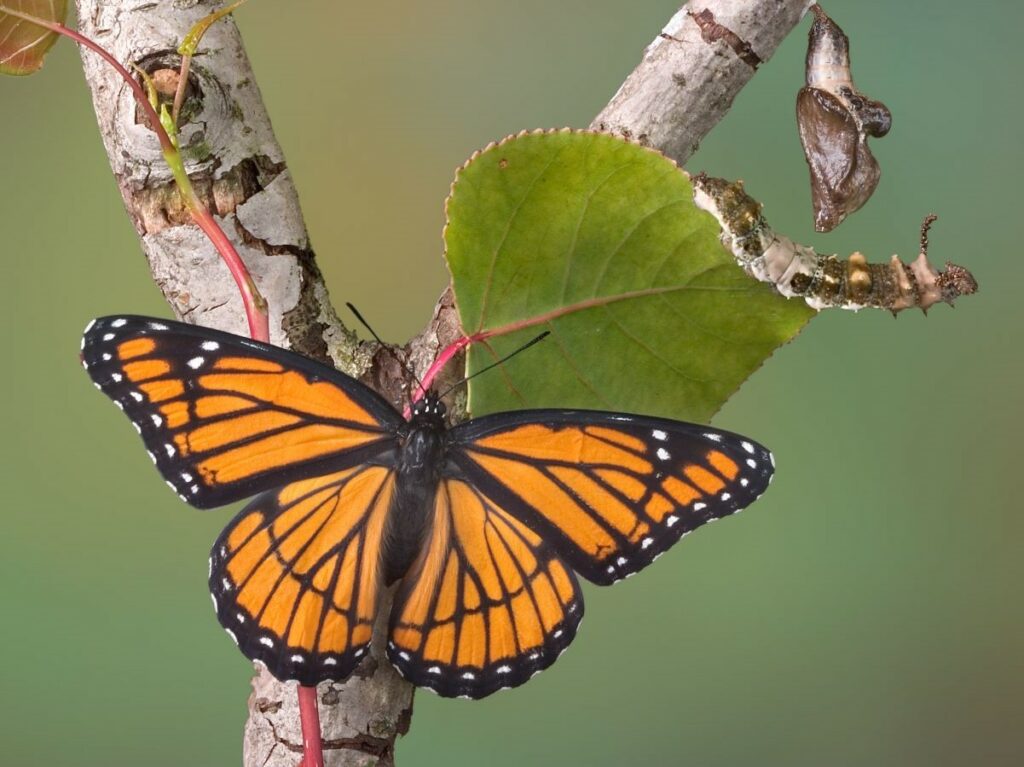
Monarch & Mimic

An orange butterfly with black markings sits on a white birch branch next to a brown caterpillar on a leaf and a brown chrysalis suspended from a branch
Viceroy (open wings)
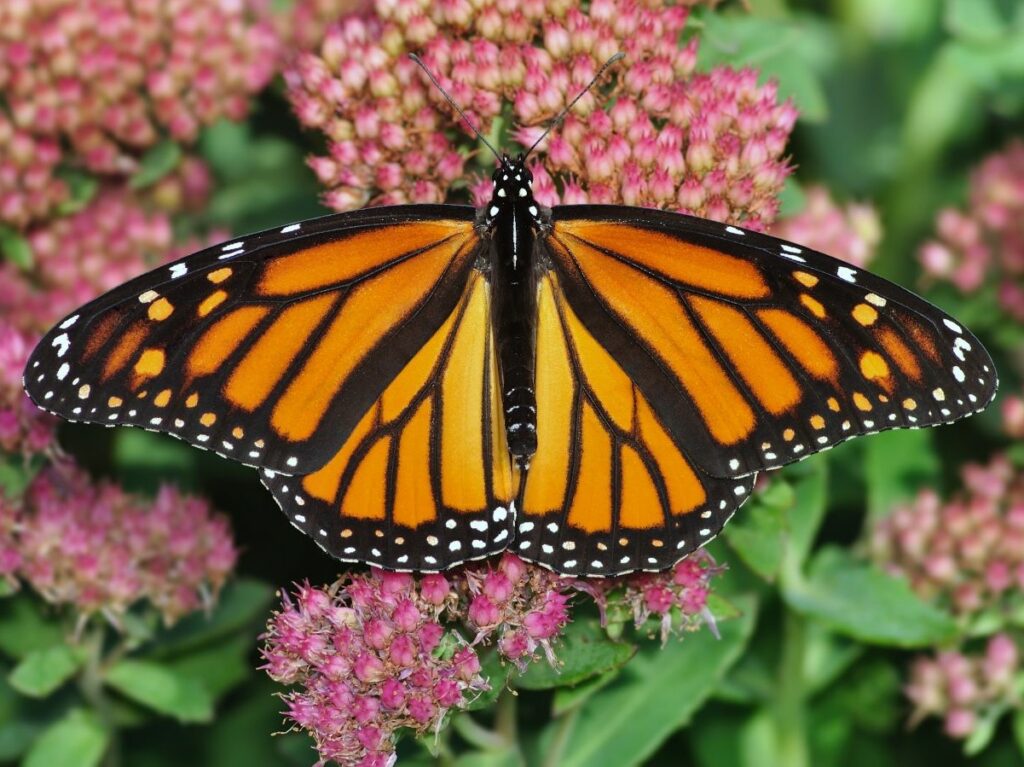
An orange butterfly with roundish wings, black markings in a vein pattern and black wing margins with white dots is on a pink sedum flower.
Monarch (female)
Monarch (male)
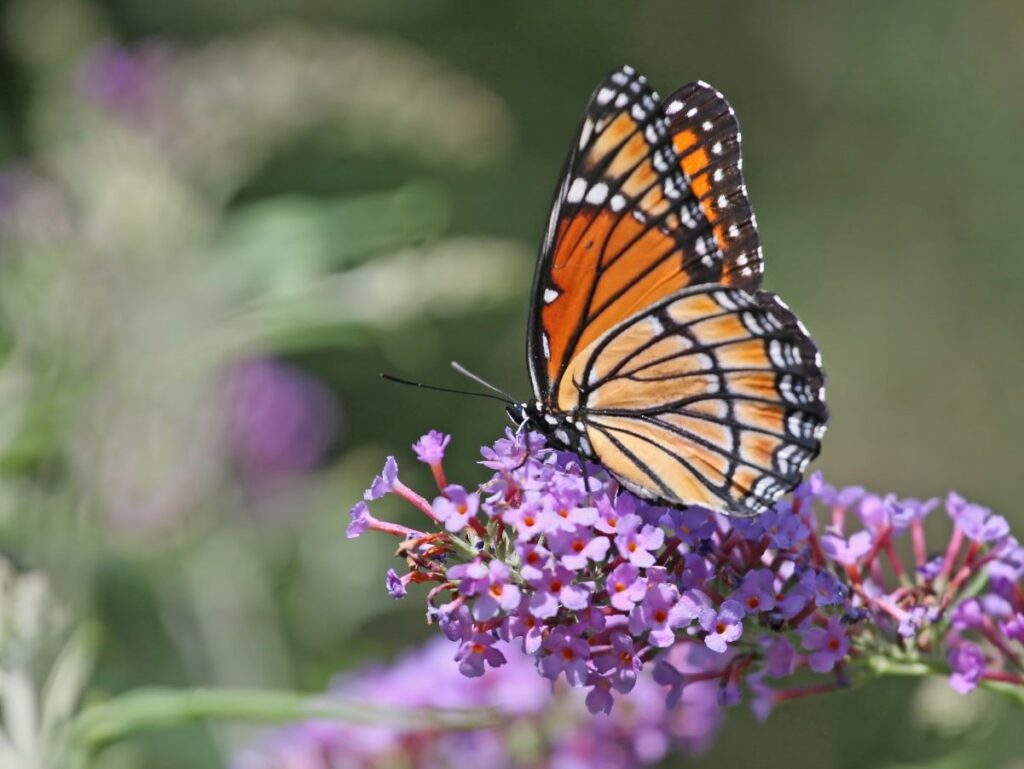
a butterfly with light orange lower under wings and dark orange underside of upper wings with black vein-like pattern and distinct white dots on black wing margins drinks from purple butterfly bush flower
Viceroy (closed wings)
Monarch (closed wings)

The Ladies

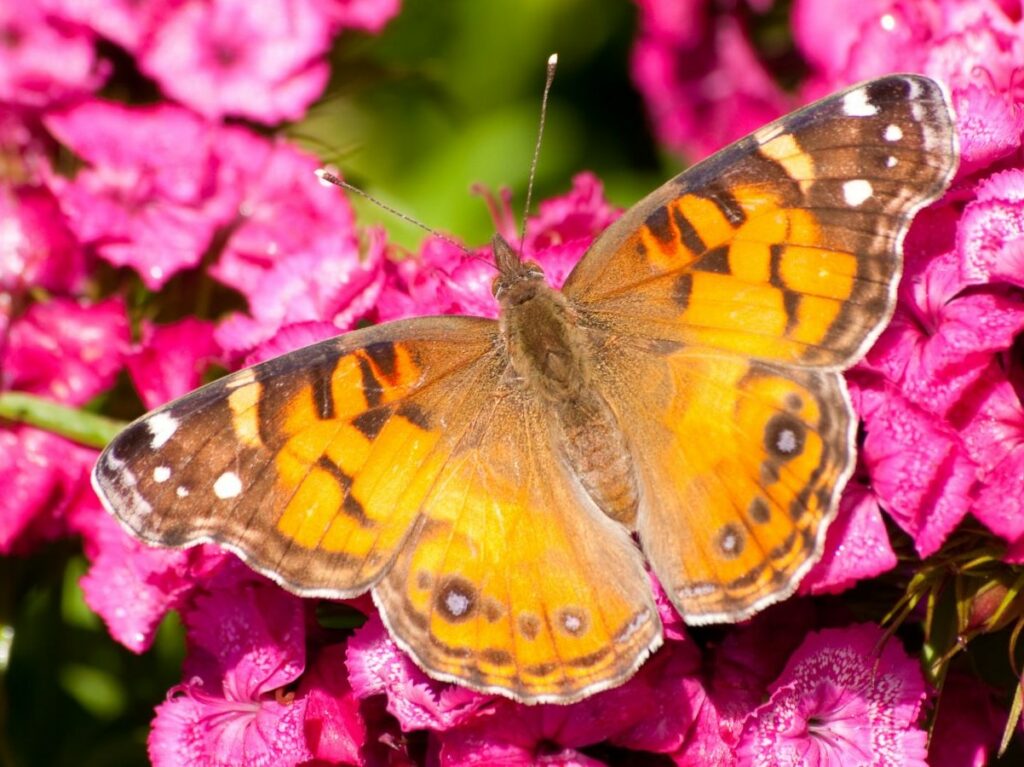
A small orange butterfly is on a bright pink phlox flower. It has blurry, light brown to pale black markings with a few white spots.
American Lady (open wings)
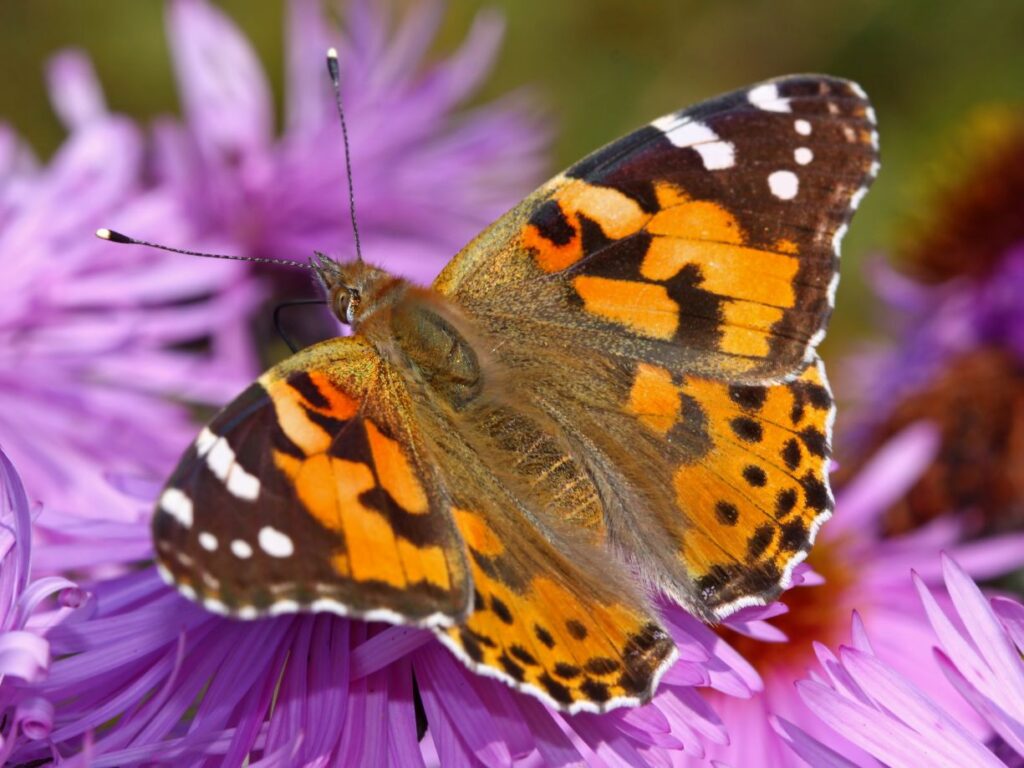
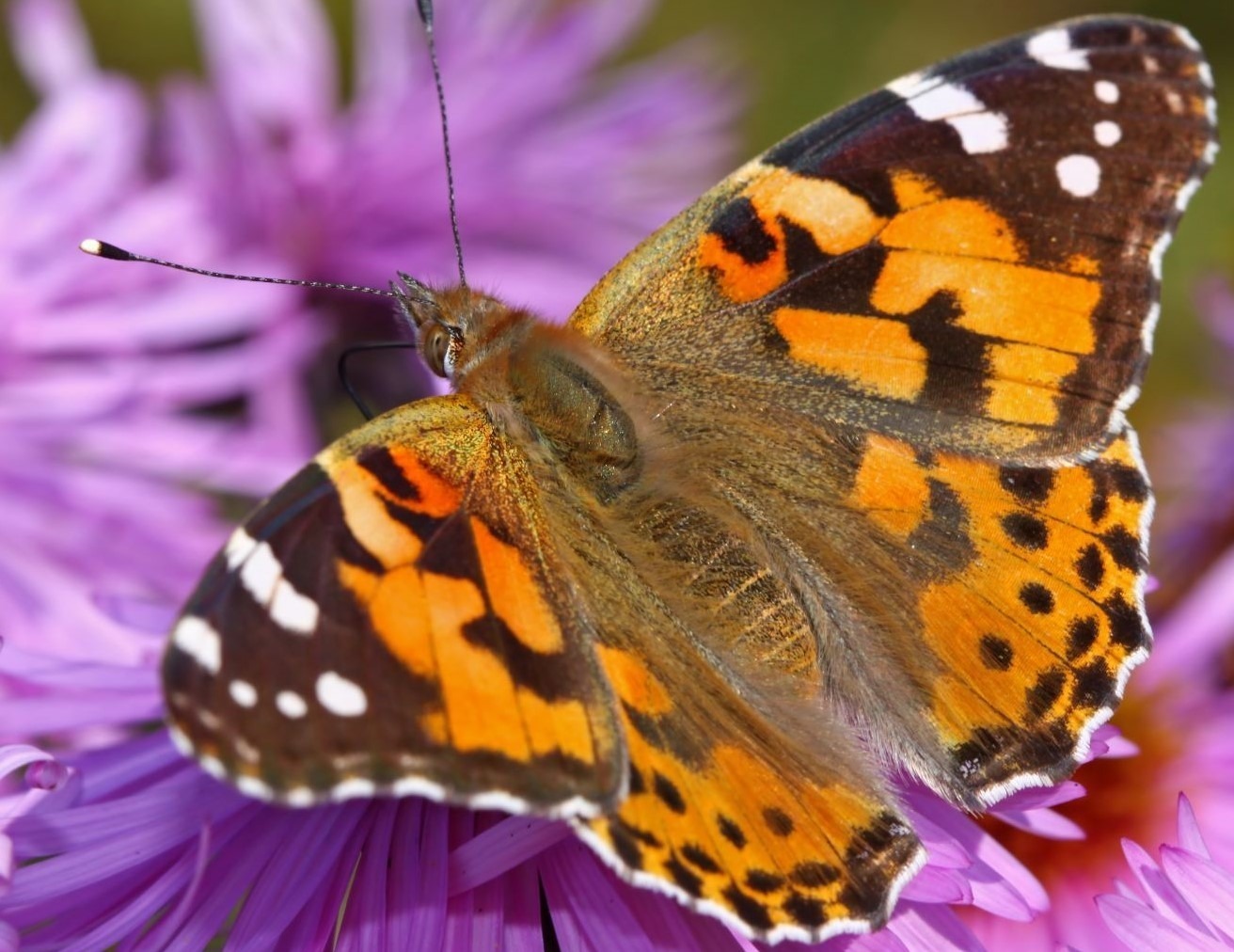
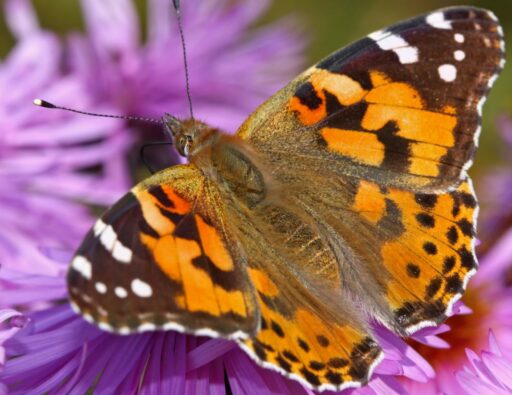
A small butterfly sitting on purple flowers has a brown body with orange and black inner wings that become orange and black toward outer edges.
Painted Lady (open wings)
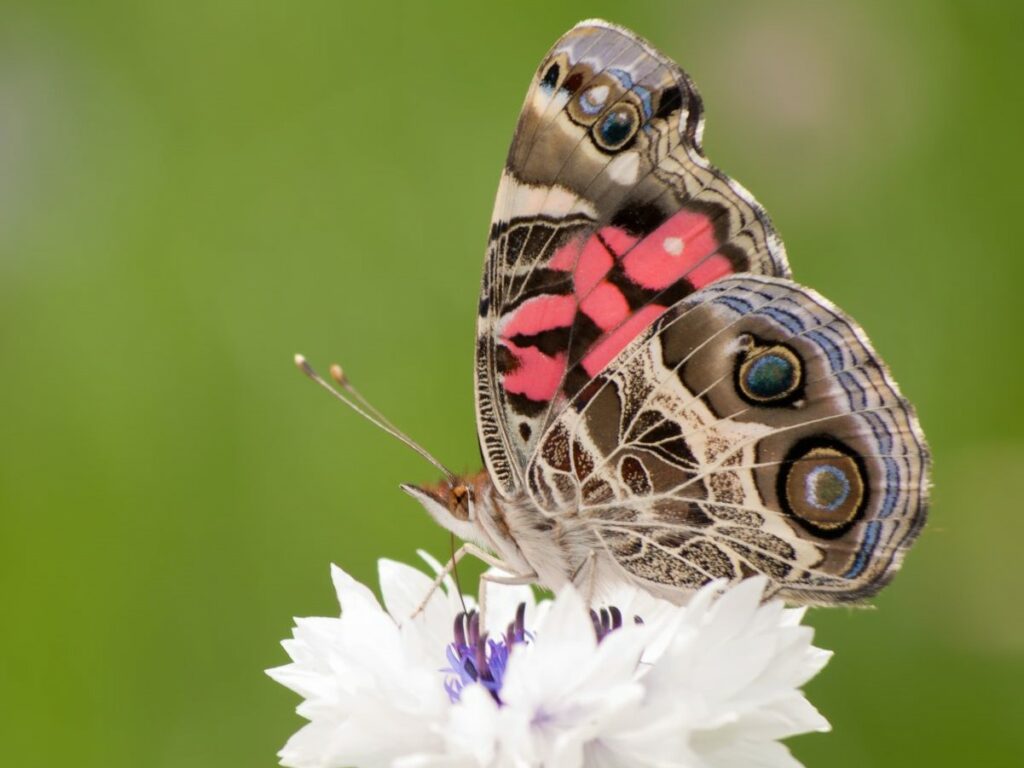
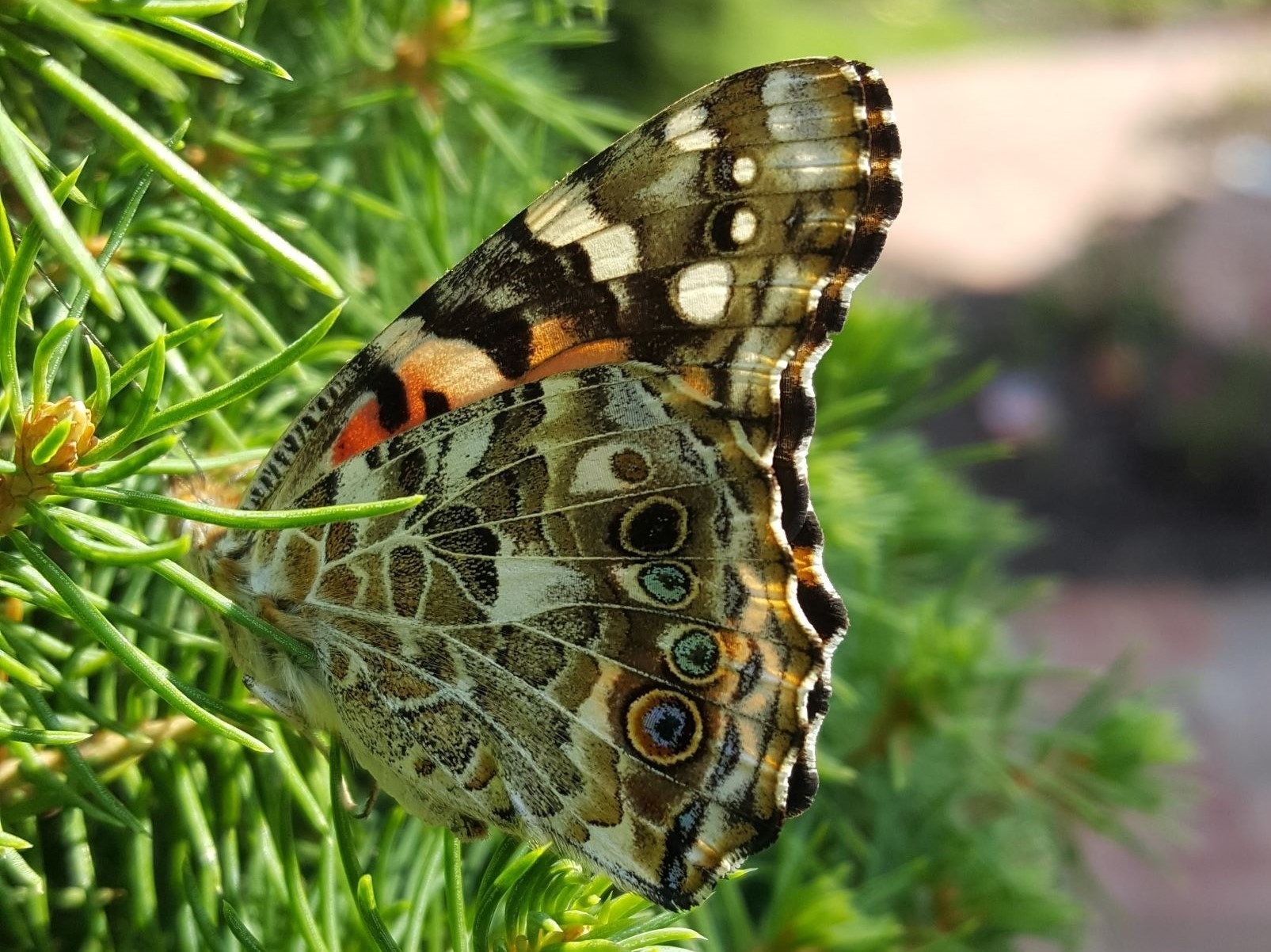
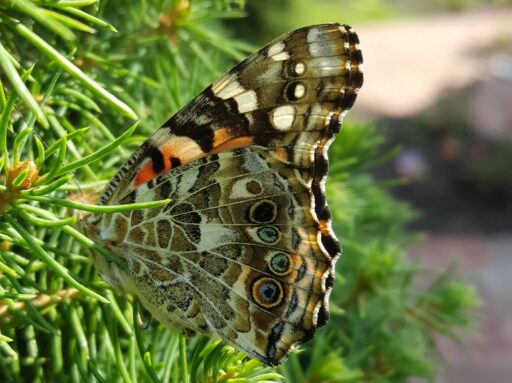
A small butterfly rests on white flower with closed wings. The lower wings are a pretty, marbled brown with two large circular spots. The upper wings are a blend of orange and brown bold markings.
American Lady (closed wings)
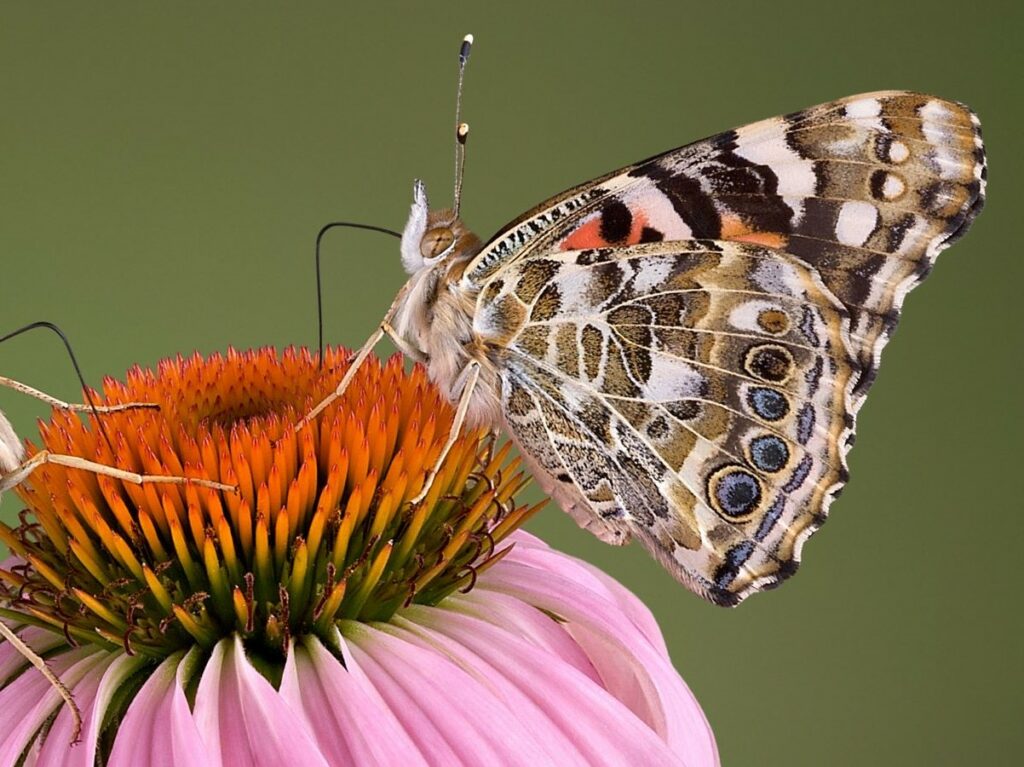
A butterfly with closed wings and long proboscis sips nectar from a purple coneflower. The underside of wings are marbled brown and white with four small eye-like circles and touches of orange and black.
Painted Lady (closed wings)

Blue Butterflies of WI

Spring Azure or Blue
(open wings)
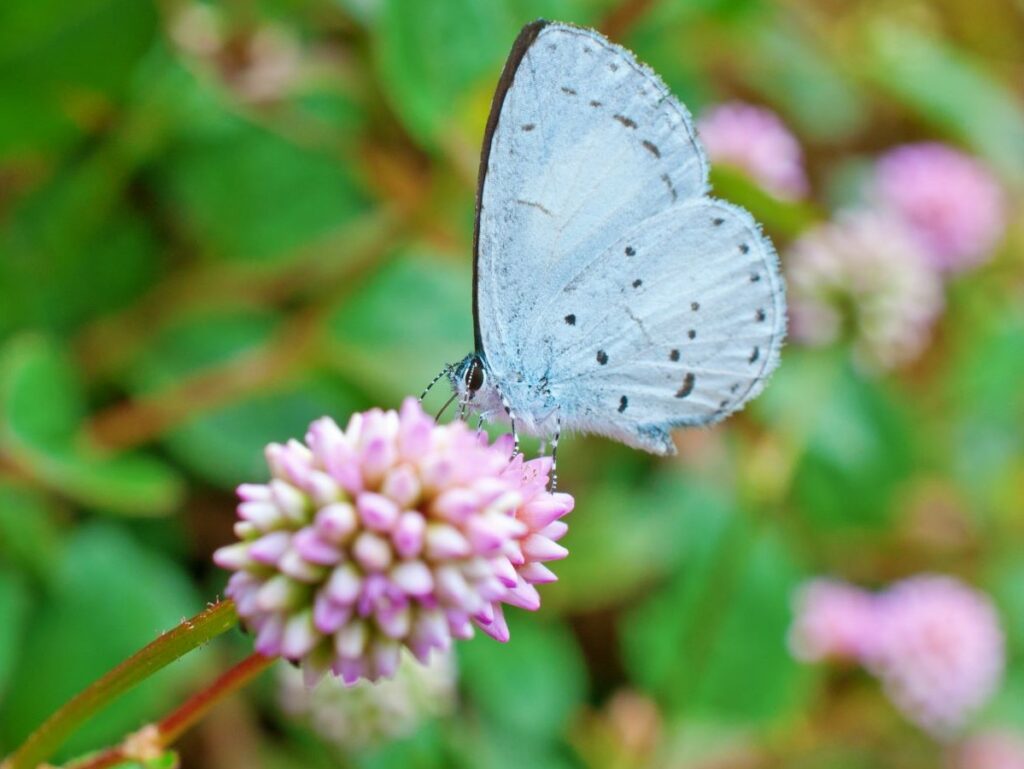
A tiny grayish-blue butterfly stands on a pink clover flower with wings closed. They are monochromatic with light brownish specks on lower wings and around wing margins.
Spring Azure or Blue
(closed wings)
Blue and black red-spotted purple butterfly with open wings
Red-spotted Purple (open wings)
Blue and black red-spotted purple butterfly with orange spots and white markings on underside of wings. It sits with closed wings on red rose bud.
Red-spotted Purple (closed wings)

Back to Top

Home | Garden Resources | Landscape Design